
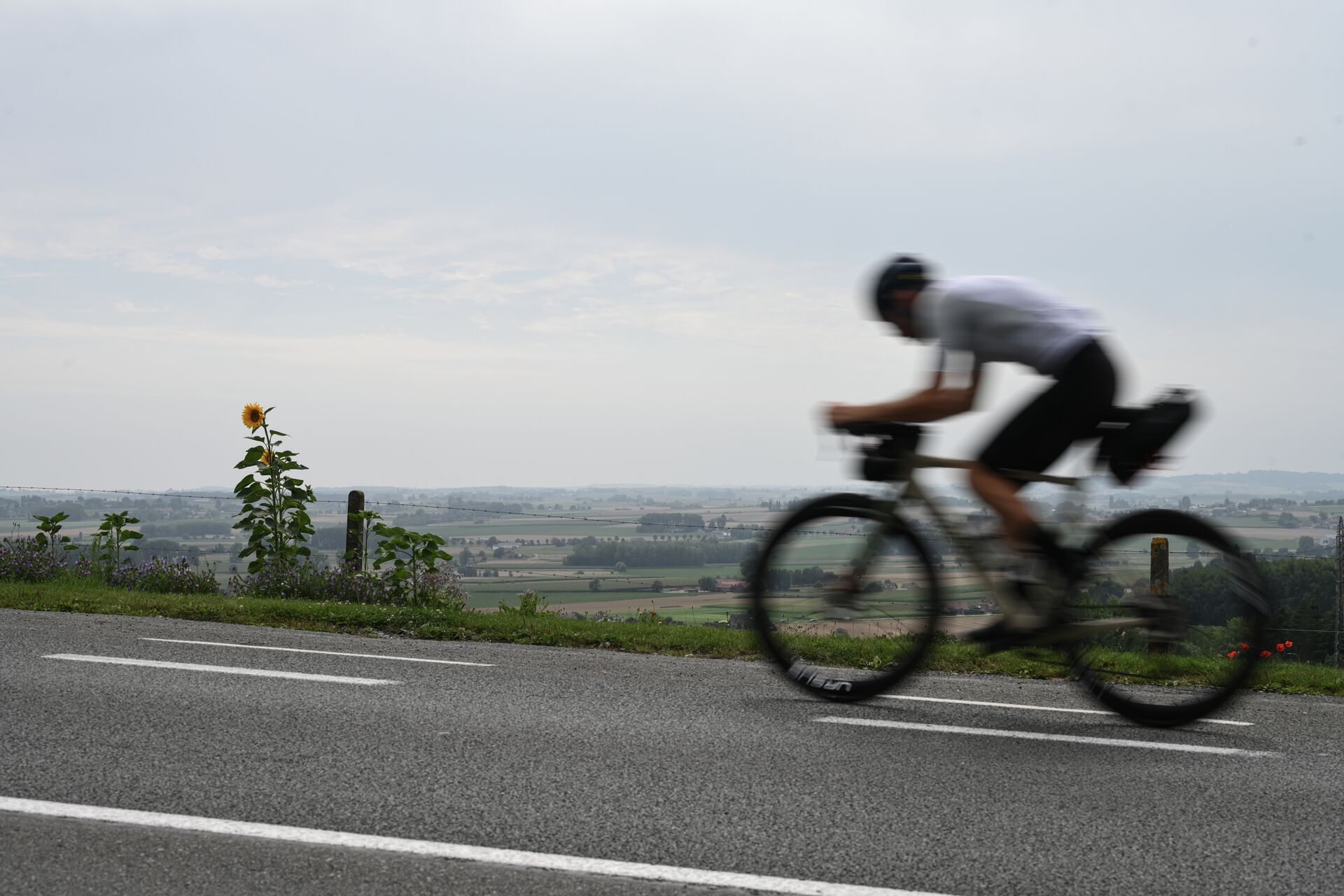
Ultimate Flanders 525: the ultimate pilgrimage to the Promised Land of Cycling
In Flanders, cycling is more than a hobby. It is more than a sport. It is even more than a passion, ... In Flanders, cycling is a religion. And Ultimate Flanders 525 is the ultimate bikepacking pilgrimage: 525 kilometres - as many as the number of victories of the supreme god, Eddy Merckx - right through the Promised Land of cycling.
We invited our friends at Grinta! magazine to discover the whole route before it was launched. This is the full story of their experiences on the road. Discover the route here.
Over every cobblestone and every hill where blood, sweat and tears were shed by Saint Tom, the merciful Mathieu and Our Lady Lotte. Past shrines and temples where cyclists are worshiped as gods. Through villages where the gospel of the bicycle has been proclaimed for decades. From Tongeren in the far east, all the way to Ypres – in Flanders Fields – in the far west.
Ultimate Flanders 525: a scourge for the body, a purification of the soul, a tribute to Cycling in Flanders.
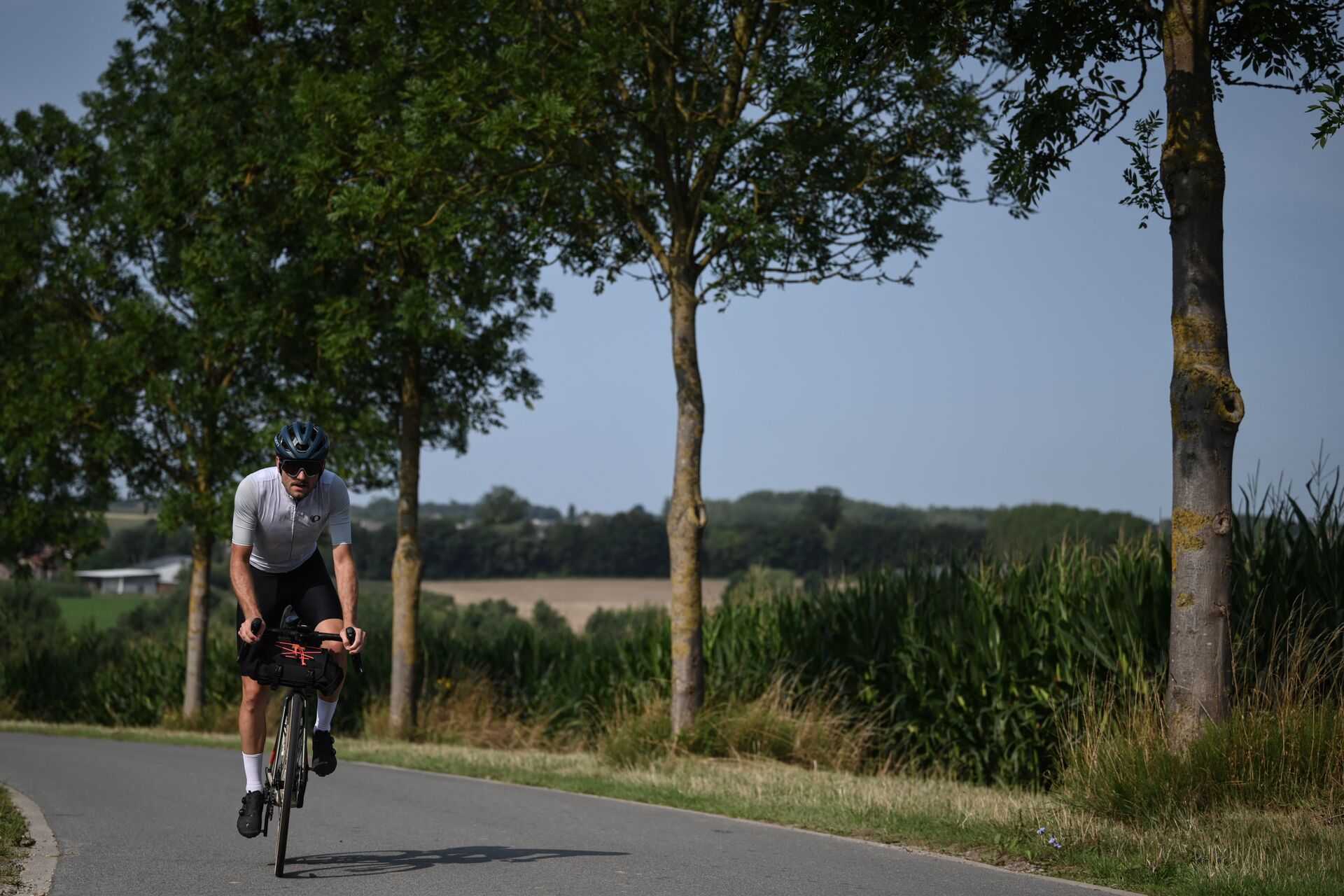
The journey begins in Tongeren, located in the far east of Flanders. The inhabitants take pride in the status of 'oldest city in Belgium'. 'Tongrorum' was located at a crossroads of Roman roads and soon grew into a place of great strategic importance. The statue of the 'local legend' Ambiorix, king of the Eburones and feared opponent of Julius Caesar, marks a fittingly symbolic place to set off on this epic quest.
Perhaps this is the right time for one last prayer? To plead that the westerly winds show some restraint? Or to ask for mercy on body and limbs? Cross your fingers one more time, lest the cobblestones devour you and your bike.
Flanders flat?
Jacques Brel referred to Flanders as 'Le pays plat' or 'My flat land', but you will soon notice that his lyrics don’t quite apply. More than the 525 kilometres that separate you from Ypres, it is the six thousand meters of climbing that will put your endurance to the test. The first hints come as soon as you roll out of Tongeren. Warm-ups, you might say. In Haspengouw the road rises and falls endlessly through a beautiful, rolling landscape of fields and orchards. The cycling race is less of a tradition here than it is further west, although new traditions are being built. The Kolmontberg, the Zammelenberg and the cobblestones of Manshoven, for instance, formed the battleground for the 2024 European Cycling Championships and the Tour of Limburg still proves where the strong are separated from the weak. You may ride your own rhythm here – but take care not to squander your strength. The real ordeal is yet to begin.
Influencers in the wild
Need a first break already after 20 kilometres? Then Café Coureur is a great place to relax in a suitable setting and to enjoy a piece of Limburg pie. You’ll need this fuel as you push deeper into Haspengouw and make your way through the countless orchards around Borgloon, Sint-Truiden and Gingelom. But don’t linger too long for there are a few more sacred stops along the route not to be missed: 'Reading between the lines' - the famous see-through church in Groot-Loon after 28 kilometres and the floating chapel of Helshoven, after 44 kilometres. Both places have nothing to do with cycling but are strikingly photogenic. With a bit of ‘luck’, you may even catch sight of influencers in the wild.
Land of sunken roads
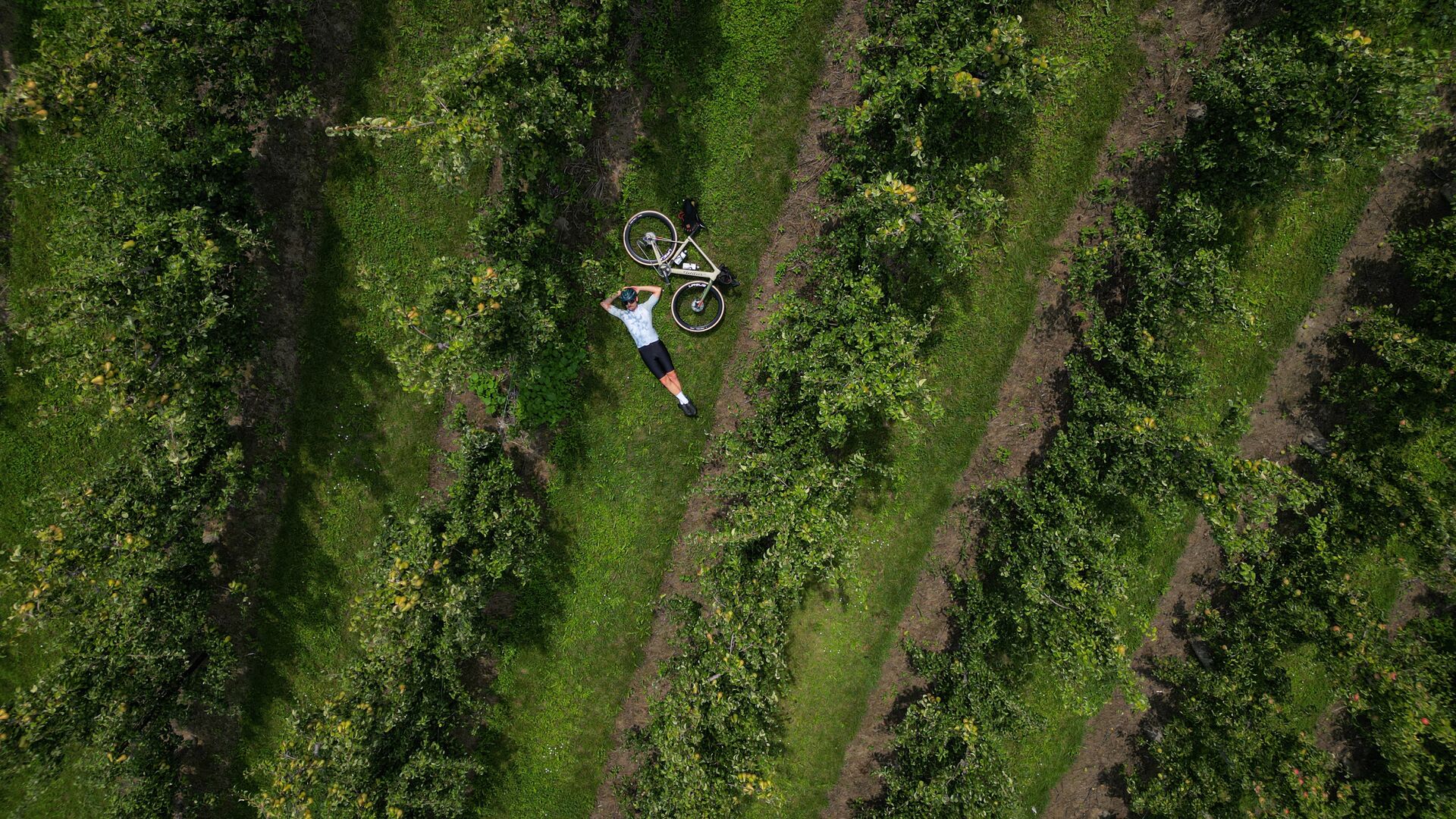
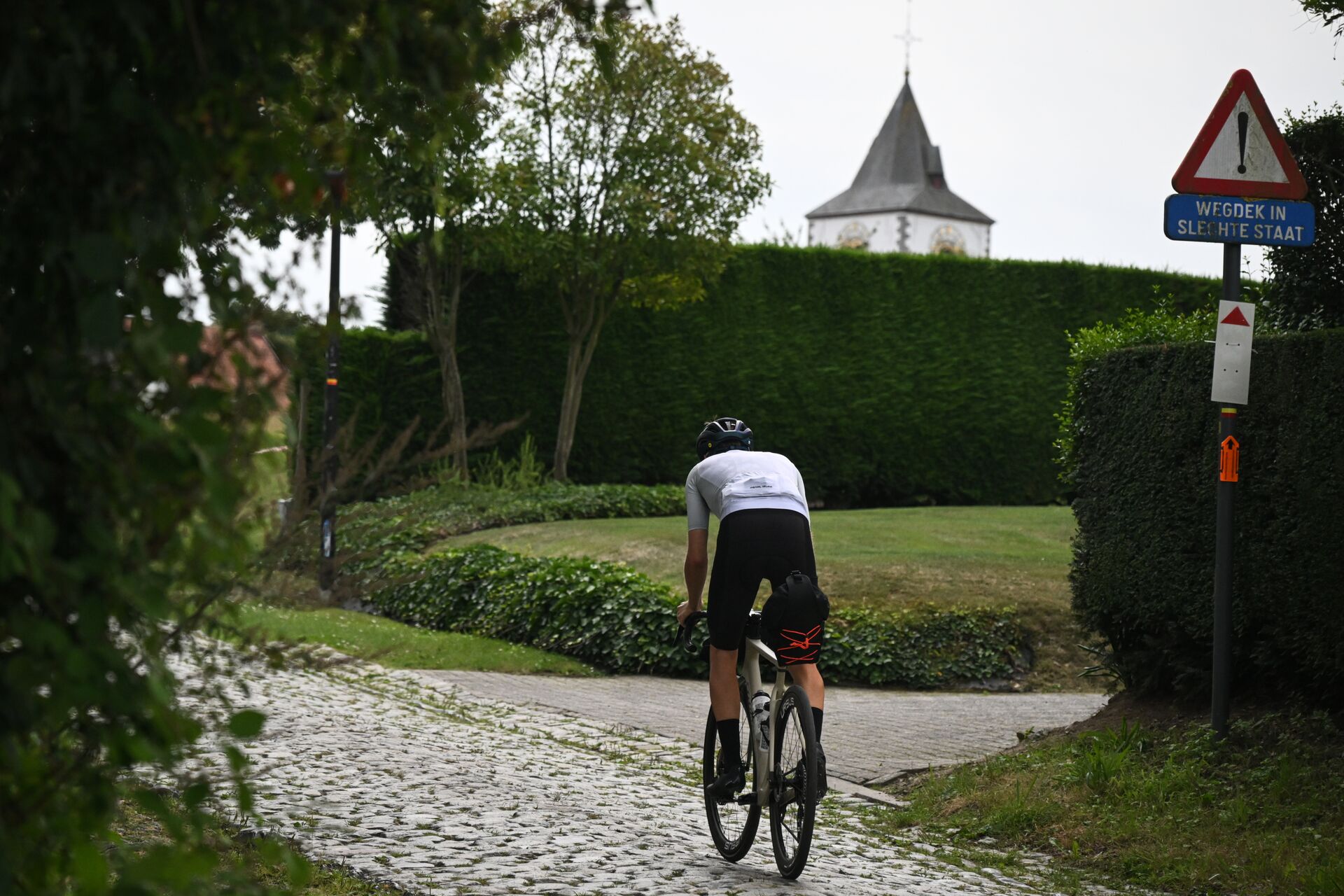
Leaving Limburg behind after the village of Velm, you hardly notice the shift from Haspengouw to Hageland – the landscape around Landen looks much the same at first. Here, too, fruit is still grown in abundance, but a typical landscape feature appears more and more often on your route: sunken roads. Centuries of use and erosion have carved these tracks deep into the fertile Hageland soil. Beautiful, but treacherous! Many plunge sharply downhill, while others climb mercilessly, as in Sint-Katarina-Hauthem. Just beyond Hoegaarden comes the perfect storm: a steep sunken road where cobblestones seem to have been scattered into the clay by some unseen hand. Near the crest, the village church emerges through the canopy of overhanging trees. Could this be Hageland’s answer to the Muur van Geraardsbergen?
Home of the G.O.A.T.
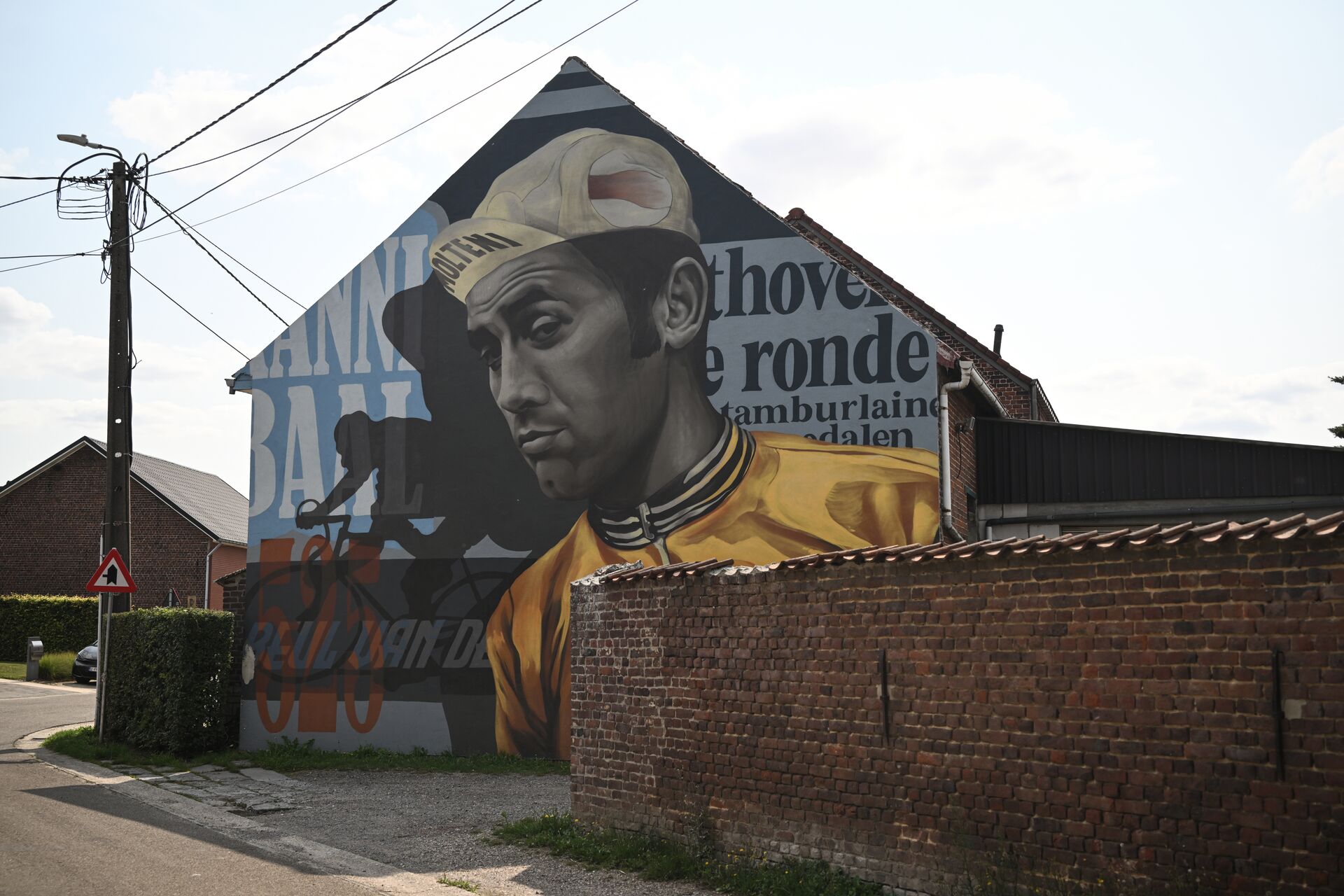
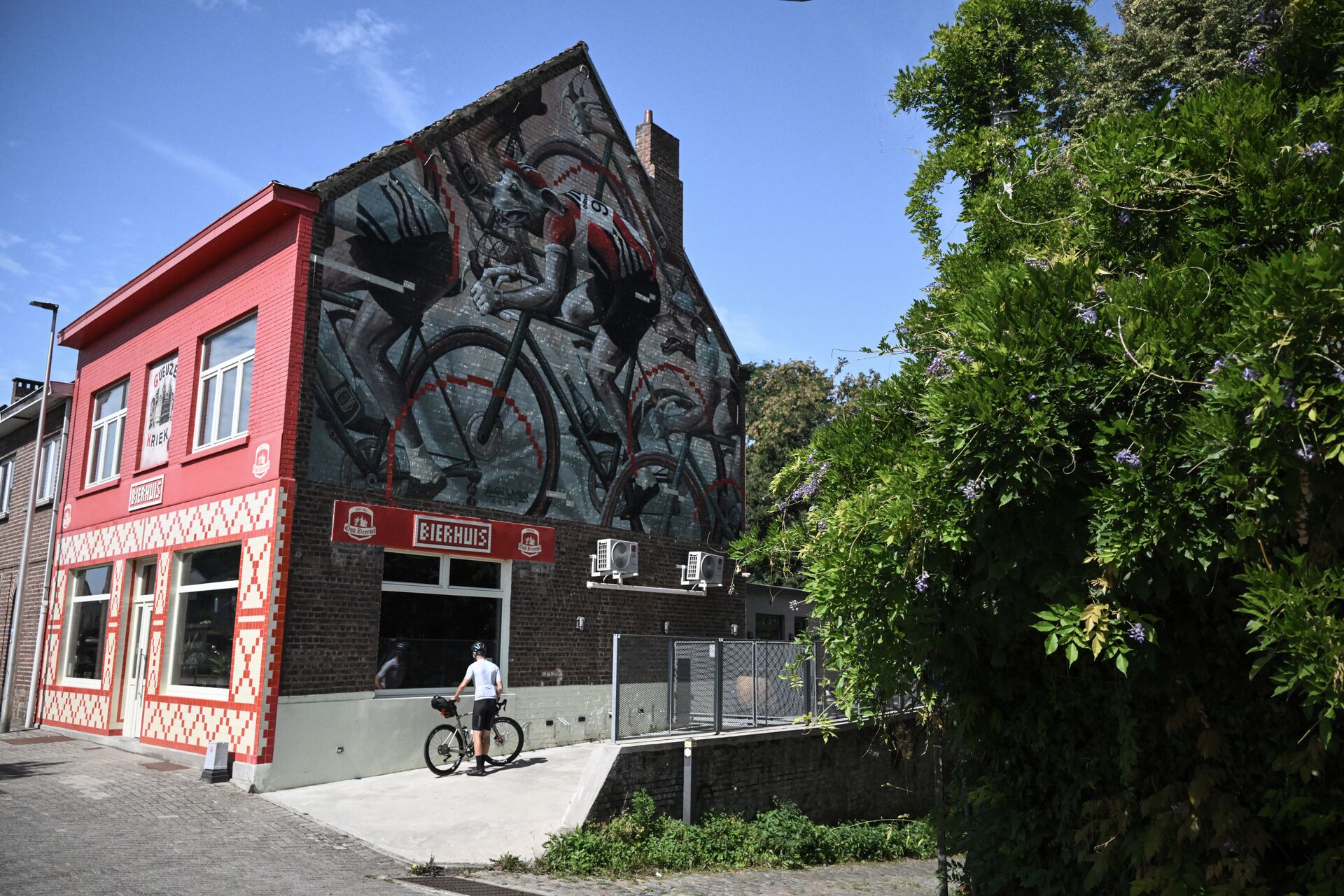
To speak of Hageland is to speak of the G.O.A.T., Eddy Merckx. The Cannibal may have spent large part of his youth near Brussels but he was born in Meensel-Kiezegem, part of Tielt-Winge and the locals are still quite proud of that. No Ultimate Flanders route would be complete without a tribute to the greatest of all time. So, get ready for a big loop that swings north via Tienen. At café 't Klein Verlet, right opposite Merckx's birthplace, a statue unveiled in 2015 pays homage to his legend. Yet it is the vast mural painted across the café’s side wall that is worth a selfie. From here, you now continue on beautiful, small and still quite gently sloping roads through the fields and meadows of Flemish Brabant.
World Cycling Championship fever
Gradually, the Grote Markt of Leuven comes into view and may well be – depending on how you pace your ride – a first stop to spend the night. With 125 kilometers already behind you, the Ramberg is an ideal way to end such a first day. This viciously steep cobbled lane in the heart of Leuven was another sadistic touch introduced by the cycling race builder of the Gravel World Championship in 2024. Leuven also hosted the 2021 Road World Championships, one of the most captivating world championships ever! The climbs testing the pros then are now laid out for you as well. We advise you not to zoom in too much on the elevation profile of the next 50 kilometres. You might lose heart...
Playtime is over
The Brabantse Pijl may not be the most talked-about of the spring classics, yet its climbs are as punishing as those of De Ronde, the Omloop or the E3. Around Huldenberg, Tervuren and Overijse, holding your bike steady is a challenge in itself. If in Haspengouw or Hageland you ever toyed with the idea of dancing lightly on the pedals, the Smeysberg will now mercilessly crush that ambition. A road sign warns of a gradient of 17 percent, a brutal initiation into what makes "Cycling in Flanders" so notorious. And if that isn’t enough, the nearby Moskesstraat sets the standard even higher: steep, cobbled, and merciless. Before plunging into the forest, you’re spurred by the images of Merckx, Boonen, Vos, Cavendish and Sagan. It is the first, but not the last time to enjoy the work of street art collective Puncheur...
Natural beauty near Brussels
While huffing and puffing, don't forget to take your eyes off that five-meter tarmac in front of your bike and take a good look around. The Dyle is a beautiful region, wedged between the Sonian and the Meerdaal forests. It is hard to believe that you are just a stone's throw from the centre of Brussels. And yet, here in Vossem, at the café In den Congo, you can drink - as we say in Flanders - a fresh pint for 'een appel en een ei' (a dime) while sitting on a terrace with white plastic garden furniture. This is Flanders too! The inspiration for the name of the café is not far off: the Africa Museum in Tervuren is amongst the best known museums in Belgium. However, there are no stuffed lions or African art in 'In den Congo', only a few jerseys of Remco Evenepoel. This is one of his supporters' clubs.
Cathedral of nature
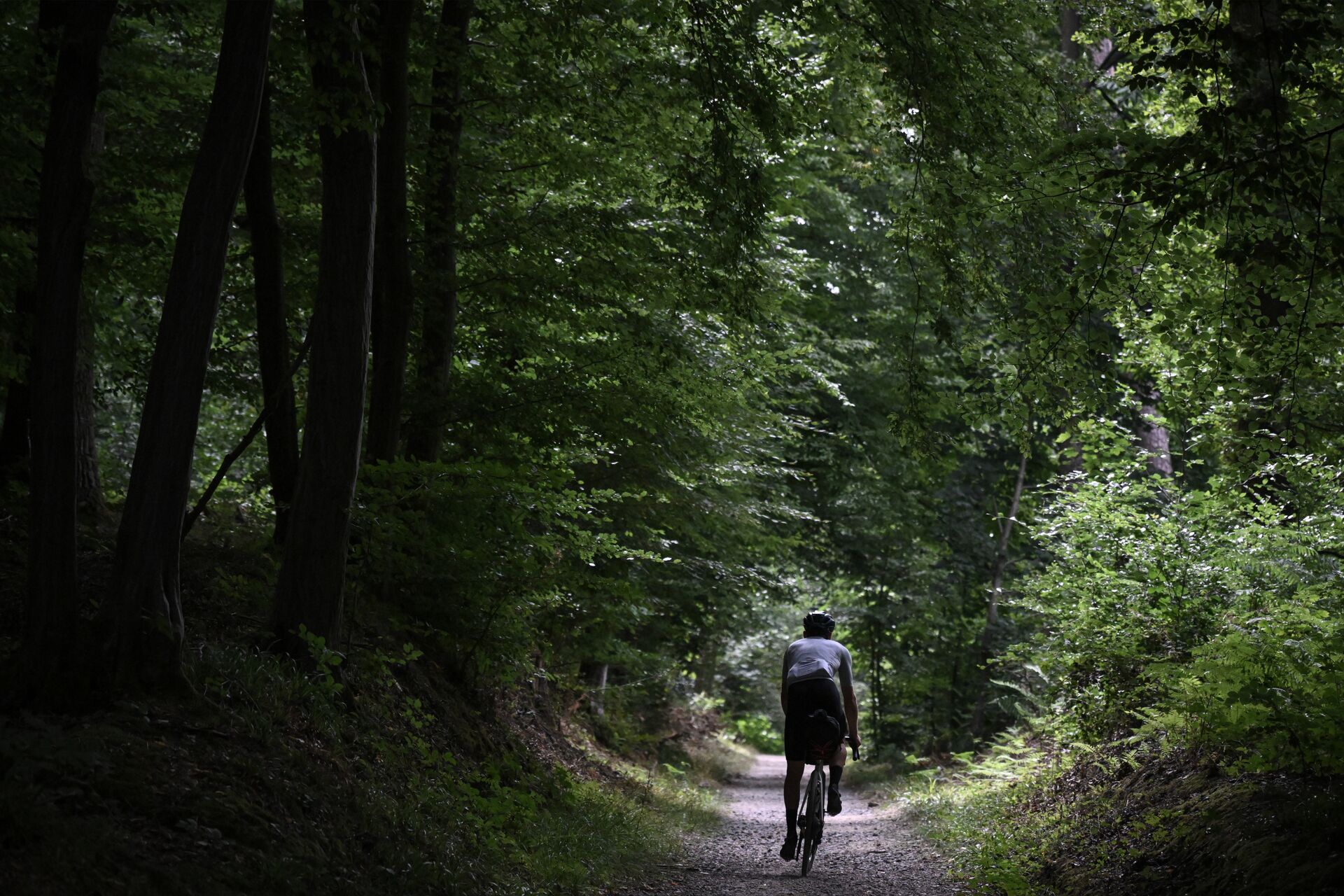
Almost as iconic in Belgium as the Africa Museum, is what follows after you have climbed the Bekestraat, the Groeneweg, the S-bend and the Schavei in Overijse: the vast Sonian Forest. From Hoeilaart, the crossing to Sint-Genesius-Rhode is quite straightforward but it is a unique stretch of route to enjoy to the fullest. In the forest, brand-new asphalt suddenly turns into champagne gravel, while the centuries-old beeches around you rise like pillars in a cathedral of nature. When leaving the forest, the odometer nears 200 kilometres since you left Tongeren. Time for a local beer?
Local nectar
Southwest of Brussels lies the Pajottenland, home to one of Belgium’s very typical brews: geuze. There are dozens of geuze breweries in the region, each more well-known and traditional than the other. To savour this local nectar – sharp on the tongue, with an extremely long shelf life, it is worth unclipping your pedals at 3 Fonteinen. Taking a supply of geuze on your bike may prove tricky but witnessing the beer maturing in vast oak barrels, like a fine grand cru, is an experience in itself. Take your time to hydrate: after this you will be cycling along a stretch of tow path towards Halle. Could these finally be the first flat kilometres of your trip?
Notorious cobblestone trinity
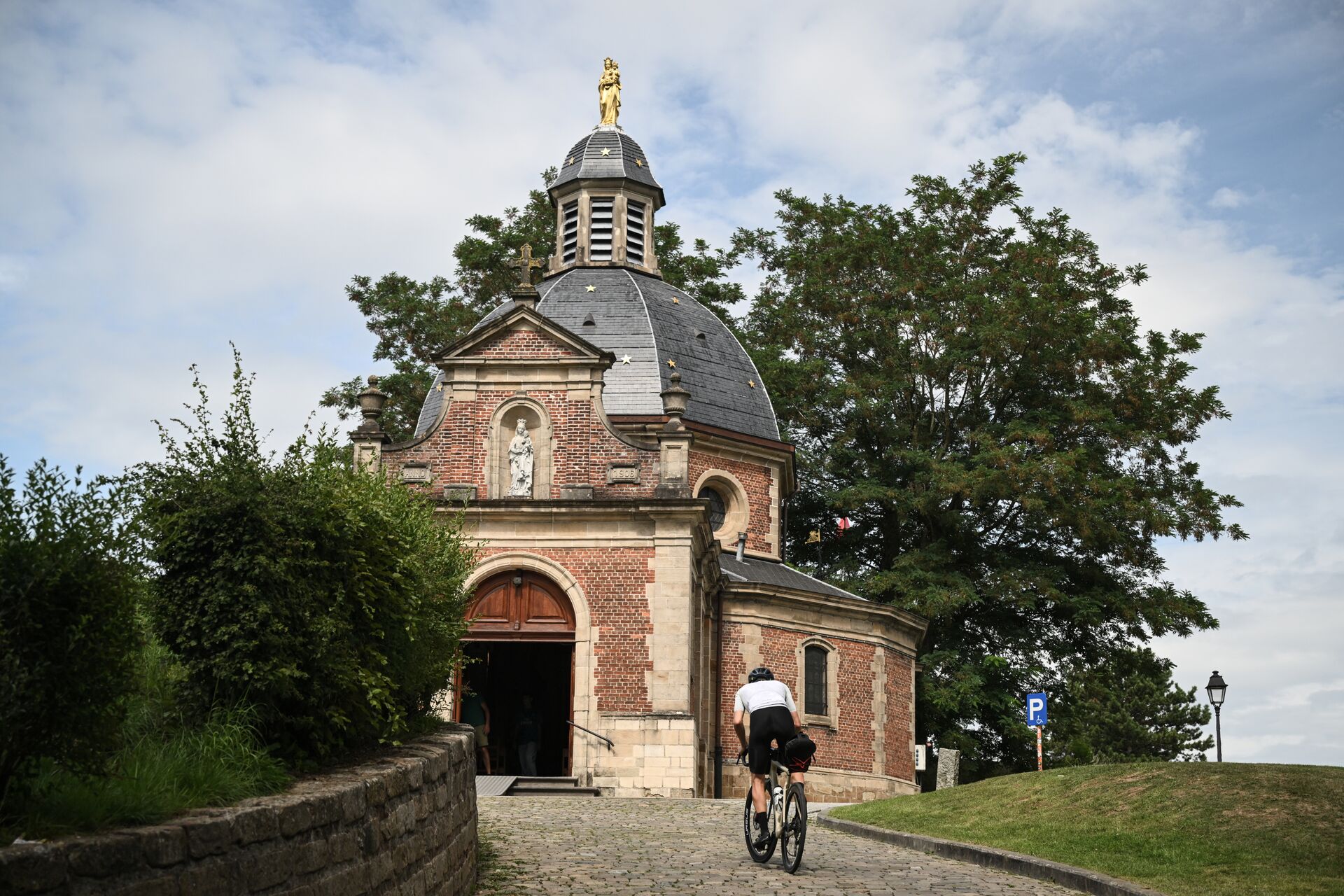
In spring, the Basilica of Halle is the destination of quite a few pilgrims but your own pilgrimage is far from over. On the contrary: after the aperitif in Haspengouw, the appetizer in the Hageland and the starter in the Dijleland, it is time for the main course of this bikepacking: the Flemish Ardennes. After a relatively easy passage through the Pajottenland we ride through Schepdaal where Remco fever reigns year-round, it goes in the opposite direction to the old finale of the Tour of Flanders to check off a notorious cobblestone trinity. After the somewhat lesser-known Congoberg, you will go to the Bosberg to climb - of course - also the iconic Muur van Geraardsbergen. By the way, did you know that here is also a Manneke Pis, just like in Brussels? It is said to be older and thus more original than the statue in Brussels and also easier to photograph. You won’t have to jostle with Japanese and Chinese tourists and selfie sticks here!
Cycling heart of Flanders
Geraardsbergen is a logical stopover if you cycle the route in four days. After 280 kilometres, you are just past halfway and in this area you can choose from a wide range of nice cycling cafes and lodgings. Bar Gidon on the ‘Markt van Geraardsbergen’ is the bar of former professional Fredje Penne while just around the corner The Cycling Hub boasts one of the coziest terraces in the city. A little further on in Parike, you can stay at the Flandrien Hotel or at Après-Vélo. You have ended up in the cycling heart of Flanders, that much is clear. You just ride on instead ? Then be sure to buy a mattentaartje in one of the bakeries and gain strength. Those extra carbohydrates will soon prove usefull....
Flemish Ardennes: mythical and murderous
The Flemish Ardennes is a hilly region in the south of East Flanders. Thanks to cycling races such as the Tour of Flanders, the Omloop het Nieuwsblad, Dwars door Vlaanderen and the E3 Harelbeke, the cobblestone sections and the slopes have acquired an almost mythical status. If you pick a few, they are quite doable. But if you string them together like pearls on a necklace, you get a murderous succession of rocky ramps and hard nuts to crack. Of course, such a series is interspersed with weathered concrete roads and pieces of false flat not catalogued as real climbs but, after all those kilometres of bikepacking, still a real challenge. Between Brakel and Oudenaarde, the list of famous names is seemingly endless: Ten Bosse, Valkenberg, Berendries, Haaghoek, Jagerij, Boigneberg, Eikenberg, Molenberg... Constantly up, down, up, down. Make no mistake: the grinding you hear comes from your teeth and not from your chain.
The legs of Boonen
We must disappoint those who thought that, just like for the cyclists in "Vlaanderens Mooiste", the suffering would come to an end in Oudenaarde. In the Tour of Flanders Centre, you will learn all about the history of the Hoogmis, but the real practical lesson lies ahead. The Koppenberg is rightly one of the Flanders’ climbs most feared by cycling tourists. When the cobblestones are slick with rain, there is little chance that you will make it to the top cycling. Hopefully your bike bags are not too heavily loaded? Every gram of extra weight seems to drag you back down again. But we have to move forward! On to more challenges in Maarkedal and Ronse. At the top of the Taaienberg, can you resist the urge to compare the circumference of your thighs with those of Tom Boonen?
'Koarle' listens
Anyone who hasn't cried out for his mother by this point should put a DNA sample next to that of Briek Schotte or Roger De Vlaeminck. The turning, climbing and descending will continue for a while. Self-chastisement is essential to becoming a better person – or in this case a better cyclist . Prepare for a hellish succession of Berg Ten Houte, the Kanarieberg, the Oude Kruisstraat, the Hotondberg, the Oude Kwaremont, and finally the Paterberg. Now that you are probably hanging over the handlebars of your bike like a wet mop, you can catch your breath in the Ronde van Vlaanderenstraat at the bust of Karel Van Wijnendaele, the original father of De Ronde. Madman or genius to send cyclists from Ghent here for the first time and so to give you too - albeit indirectly - a hard time? You tell me! "Koarle" is listening.
White roads
At this stage, what difference can one more climb make? And so, for good measure, we throw in the Côte du Trieu and the Kluisberg, squeezing the very last drops of 'juice' out of your legs before recovering. Once the ridge between Ronse and Kluisbergen disappears from view, the road slowly but surely flattens out and in Kortrijk you are rewarded for all your hardships with a kilometre-long tow path along the Leie. You are now starting the last 'cycling race re-enactment': that of Ghent-Wevelgem. Then you also know that the plugstreets are coming. White roads, a mixture of gravel and asphalt that has lost all sense of cohesion over the years, a scourge for every race tire and cyclist's body.
In Flanders' Fields
Alongside the 'plugstreets', the many war monuments are particularly characteristic of the region. The Irish Peace Park in Mesen, the Plugstreet 14-18 Experience, the Christmas truce memorial... But also the many smaller cemeteries, sometimes bordering on a backyard or lying quietly in the middle of a meadow, speak most poignantly of the enormous massacre that took place 'in Flanders fields'. The neatly maintained, snow-white gravestones contrast with the green meadows and earth-brown fields. They are part of Flanders, unfortunately.
Breathing a sigh of relief
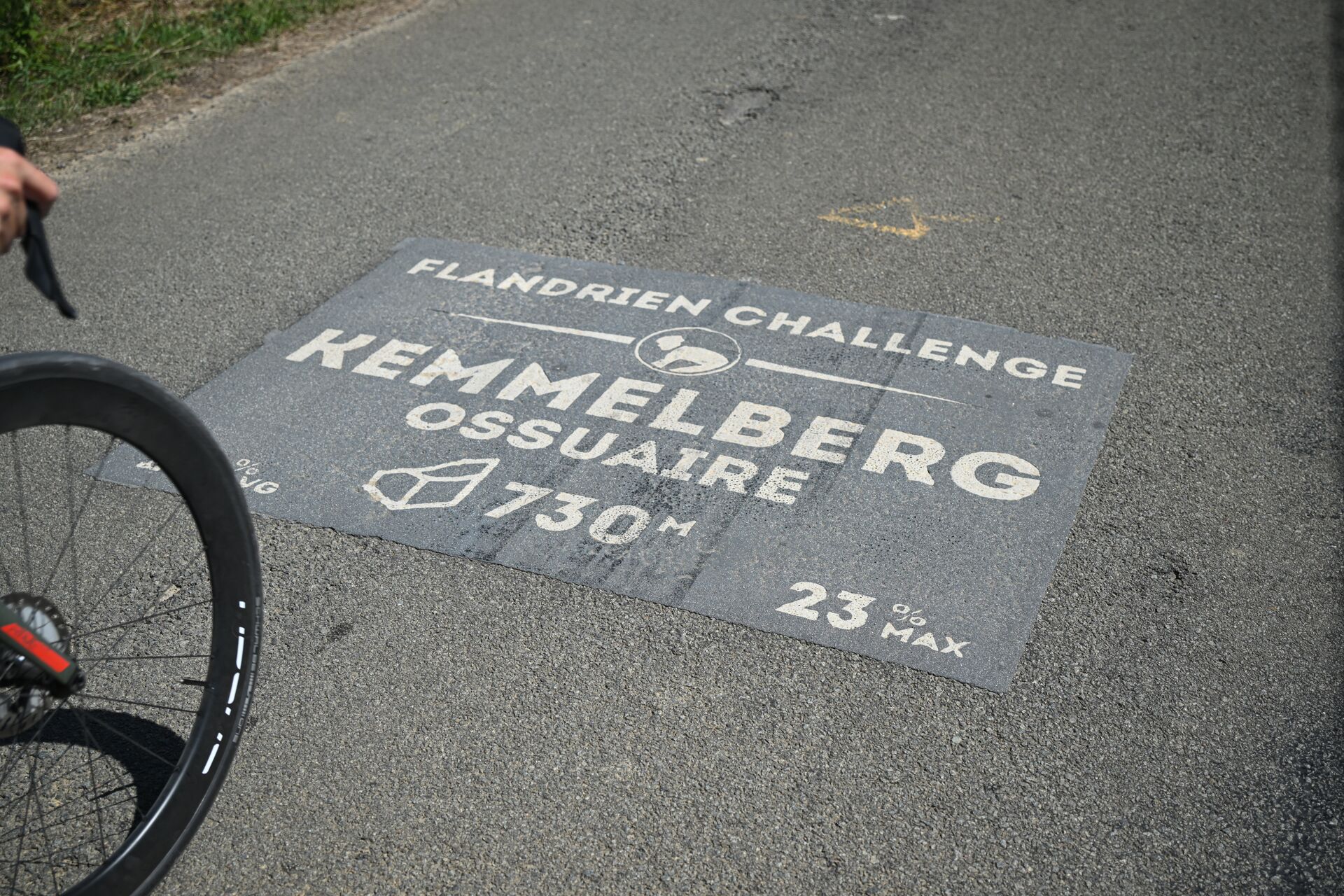
After that focus on the past, back to the here and now, because something appears at the end: the Kemmelberg. A comparison with the Ventoux may be a bit exaggerated, but in the otherwise almost flat West Flanders, the stone hill looks formidable. You can climb it on two sides, but fortunately we will keep it to one, the most difficult side: a wide cobblestone road that draws a straight line from the French 'Ossuary' with a gradient of more than 20% towards the top. The gigantic statue in honour of the French soldiers who died here is your target and is approaching painfully slowly. At the top you will breathe deeply but also with relief. The worst is now over. A last climb over the Monteberg and the Baneberg will take you to an iconic part of Flanders: the Cordoba chairlift gliding above the Entre Deux Monts vineyard. Yet by now, you will likely have no desire to linger, wanting to blast towards Ypres as quickly as possible. Well deserved !
Monumental closure
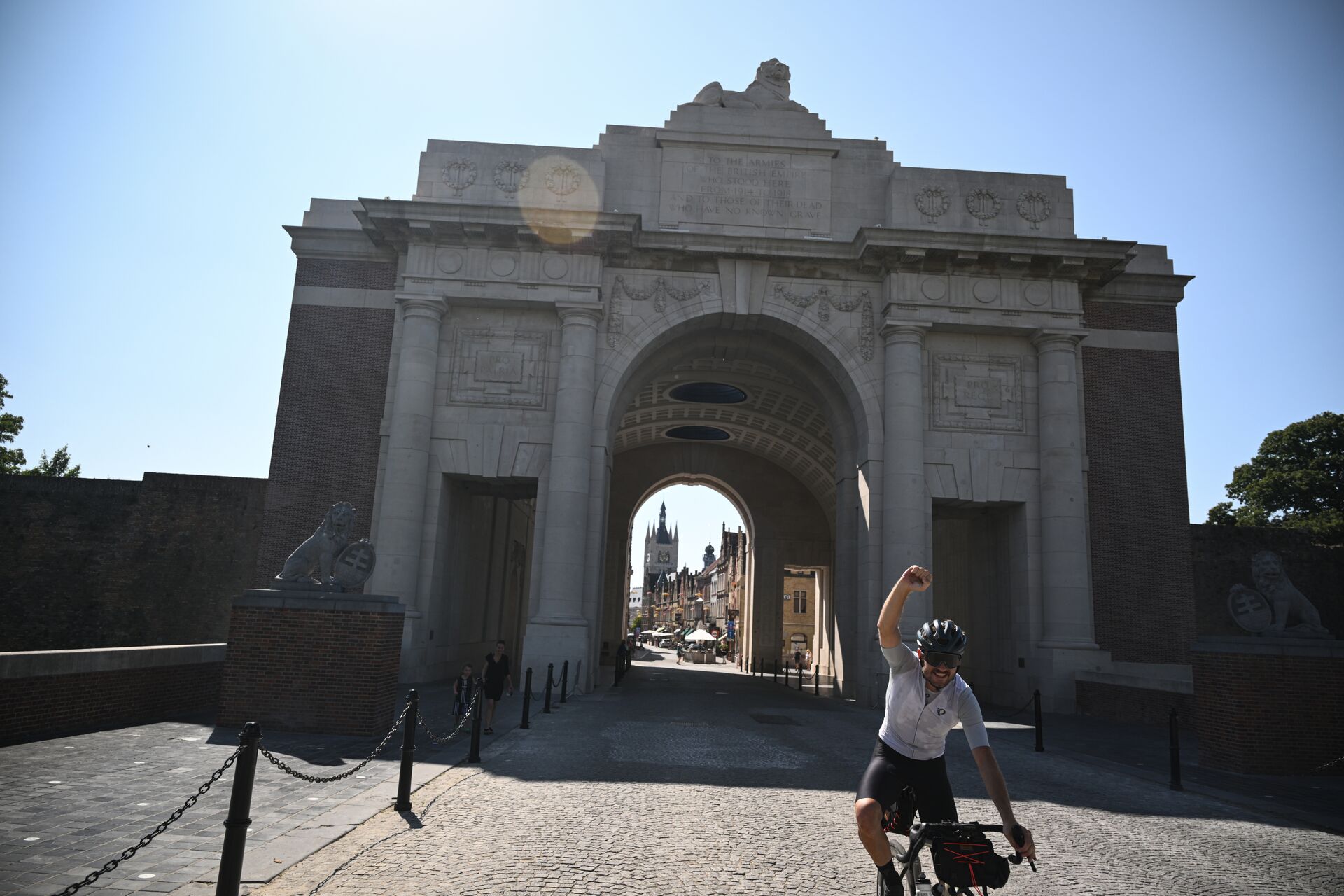
The last kilometres to Ypres run in a descending line and from far the imposing belfry of the medieval cloth halls comes into view. By the way, did you know that when it was built in the thirteenth century, this was the tallest structure north of the Alps? The end is literally in sight and where better to squeeze the brakes than under the Menin Gate? Under this monumental building, your monumental journey comes to an end. You did it, brave warrior. We salute you!
Discover even more history in the KOERS museum
Do you have time for a little extra? Then be sure to go from Ypres to Roeselare, because there you will find KOERS, the museum of Cycling. It has an impressive collection of cycling memorabilia, which are researched and managed in an almost scientific way. From Eddy Merckx's sweaters to more than 300 original bicycles to cabinets full of newspaper clippings and photo material. KOERS is a temple where cyclists are honoured like nowhere else. The perfect conclusion to your pilgrimage through the most cycling-loving region in the world.
The Ypres-Roeselare route is easy to do by train. Although the real 'diehards' can of course also take the bike! You then extend the Ultimate Flanders route with an extra stage. The GPX file for this route can be downloaded here.


